
How Emergency Management Planning Works for Fire, Flood, Earthquake and Severe Weather Risks

A fire alarm doesn't ask if you're ready. Neither does a flood, and an earthquake definitely won't send a warning text first. That's the whole problem with disasters: they show up uninvited, and the only real defense is having worked out your response long before one hits. This is where emergency management comes in. Not as paperwork, but as the actual homework that gets done before anything goes wrong.
There's a saying among planners: nobody actually uses the plan word-for-word once a disaster starts. What they use is the training behind it, the drills, the muscle memory. That's the part that counts. Ask any experienced emergency management agency, and they'll tell you the same thing: the document matters less than the practice that built it. Let’s find out how Emergency management planning stands tall during any business crisis!
Breaking Down What Emergency Management Actually Means
Take away the official language, and emergency management is really just this: getting ready before trouble hits, handling it well while it's happening, and putting things back together once it's over. Not a binder collecting dust in a filing cabinet somewhere. Real, ongoing work.
Most people in the field split it into four parts, though in practice they overlap more than any chart suggests:
The boring but most important groundwork, things like reinforcing a wall, moving a server room off the ground floor, or fixing a policy before it causes trouble.
Preparedness
Writing the plan, sure, but mostly training people on it until the steps feel obvious instead of foreign.
Response
The moment things go sideways. Phones ring, teams move, decisions get made under pressure.
Recovery
Everything that comes after is recovery. Doors reopen, staff gets checked on, and someone writes down what to fix next time.
A good emergency management specialist doesn't treat these as four separate jobs. They're one loop. What you learn cleaning up after a flood becomes the mitigation plan for next spring.
Why Spend Time Preparing for Something That Might Never Happen
Fair question. If a disaster might not even happen, why put money and hours into planning for it? A few answers hold up under scrutiny.
People matter more than anything else.
Evacuation routes, floor wardens, shelter-in-place steps- these exist so nobody's stuck guessing what to do the second an alarm starts.
Downtime is not cheap.
An hour without operations is an hour of lost revenue, plus a client left wondering where their order went.
A lot of industries require it.
Insurance and regulatory standards in many sectors expect a documented plan on file.
Coordination saves the minutes that count.
Teams with clear roles beforehand skip the confusion that eats up precious time during an actual event.
People remember how you handled it.
Staff and clients notice whether an organization stayed composed or scrambled, and that impression sticks around.
This is exactly the kind of groundwork a capable emergency management agency like Business Contingency Group is built to provide, long before anyone needs to call one.
Preparing for Fire Risk: The Threat That Moves the Fastest
Fire moves faster than almost any other hazard. It could start from a wiring fault indoors or a wildfire pushing in from nearby land, and either way, there's rarely much time to react.
A strong fire plan usually includes:
Regular checks on alarms, sprinklers, and fire suppression systems, not just once a year.
Evacuation routes that get updated whenever the building layout changes.
Trained floor wardens who can calmly guide people to safety.
A clear meeting point outside where attendance actually gets checked.
A working relationship with the local fire department for a faster response.
Drills done often, not occasionally, are what make people react instinctively instead of freezing when time matters most.
Preparing for Flood Risk: The Slow-Building Threat (Until It Isn't)
Floods can build slowly over days of rain, or hit suddenly when drains overflow or a levee fails. Either way, water tends to damage electronics, records, and equipment all at once.
Solid flood planning includes:
Checking local flood maps so you actually know your risk, instead of assuming your building is safe.
Moving critical equipment and records above expected flood levels where possible.
Setting up backup power and communication in case utilities fail too.
Writing down a shutdown process for anything that can't be moved in time.
Keeping a tested continuity plan so work can shift elsewhere if the main site floods.
Facilities in flood-prone areas gain the most from working with an experienced emergency management specialist who can turn flood data into a practical plan for that specific building.
Earthquake Readiness: Why It Has to Be Built In Ahead of Time
There's no siren for an earthquake. No forecast, no five-minute heads-up, nothing. The ground just moves. That means the prep work has to already be part of how a building runs on a normal day, because there's no window to react once it starts.
Bolt down bookshelves, cabinets, and anything heavy enough to hurt someone if it topples.
Run "Drop, Cover, and Hold On" drills until people don't have to think about the steps.
Get older buildings checked for structural weak points; don't just assume they're fine.
Have a clear process for inspecting a building before anyone's allowed back inside.
Keep an emergency kit stocked: water, first aid basics, some way to communicate if phone lines are down.
One more thing worth mentioning: aftershocks are common. Recovery plans should account for more than one shake, because the first one usually isn't the last.
Severe Weather Planning: The One Hazard You Actually See Coming
Hurricanes, tornadoes, winter storms, extreme heat- severe weather covers a lot of ground. But here's the upside compared to earthquakes: you usually get some notice. Maybe hours, maybe a couple of days. That gap is worth a lot if you use it right.
Sign up for reliable weather alerts, and make sure there's a clear chain for passing word along fast.
Decide ahead of time, not in the moment, what conditions mean pausing operations or heading to shelter.
Secure loose outdoor equipment and signage before the wind actually picks up.
Know exactly where the safe space inside your building is for tornado conditions, not a vague idea of one.
Keep an eye on your supply chain too; a storm hitting a supplier two states over can slow you down just as much as one on your own doorstep.
Severe weather tends to hit a whole region at once, so staying in touch with nearby organizations and local authorities usually pays off.
Why It's Smarter to Build One Master Plan Instead of Four Separate Ones
Here's something a lot of organizations get wrong: they build a fire plan, a flood plan, an earthquake plan, and a weather plan, all separately, with no real connection between them. The better approach is one core emergency operations plan, with specific add-ons for each hazard. Underneath it all sits the Incident Command System (ICS), which keeps roles and communication consistent no matter what kind of disaster shows up.
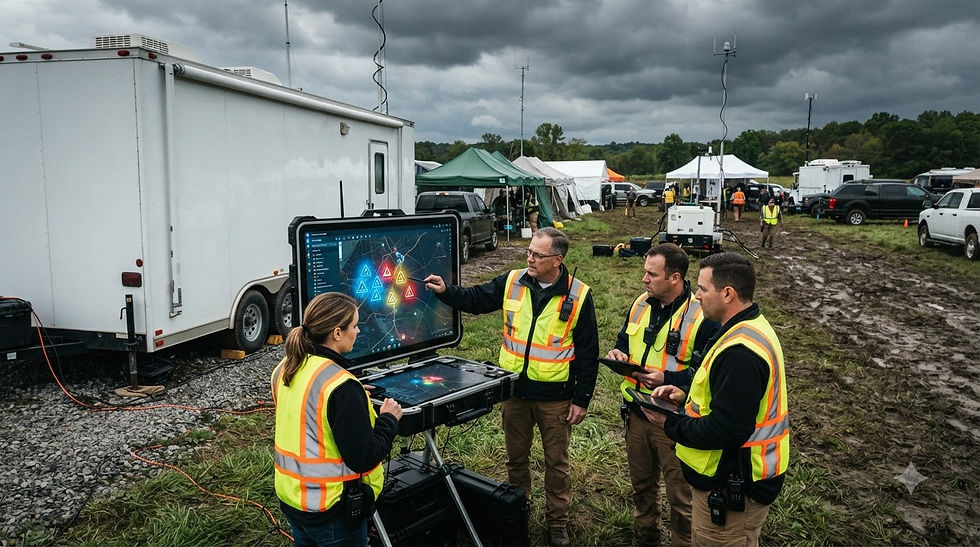
An Emergency Operations Center, whether it's a physical room or something run virtually, becomes the hub where all that coordination actually happens. Good crisis software lets a team share updates in real time, track resources, and keep a full view of the situation across multiple locations at once. That's what lets one trained team handle a fire this year and a flood the next, using a process they already trust instead of starting from scratch.
Emergency management and business continuity work hand in hand when an organization needs to keep essential operations running during a crisis. For a closer look at how these two areas complement each other, read our guide on How Emergency Management and Business Continuity Work Together to Keep Operations Running.

Why a Plan Nobody Has Practiced Is Really Just a Guess
Writing a plan is the easy part. Testing it is where the real learning happens. Tabletop exercises, live drills, full-scale simulations- these are the only things that expose gaps a document alone will never show you. After every drill, and definitely after every real event, someone needs to sit down honestly and write up what worked and what didn't.
Skip that step, and plans go stale without anyone noticing: new hires who never trained on it, a remodeled building nobody updated the map for, a risk that didn't even exist two years ago. Planning isn't a one-time project with a finish line. It needs upkeep, the same way any equipment does.
Putting a plan into practice is just as important as creating it. BCG provides training and exercises that help organisations test emergency procedures, practise response roles, and identify gaps before a real incident occurs. These include workshops, tabletop exercises, drills, and full-scale exercises.
Closing Out:
No one can predict exactly when a fire, flood, earthquake, or severe storm will hit. What organizations can control is the groundwork done before it happens, so people already know the next move when it counts. That kind of preparation protects lives, keeps operations running, and builds a level of trust that's hard to earn any other way.
If your organization wants that kind of readiness, then we at Business Contingency Group have spent years helping public agencies and private companies build emergency management programs that actually hold up when things go wrong. Reach out to us and stay prepared before the disaster happens!
Frequently Asked Questions
Q1. What is the first step in emergency management planning?
Start with a risk and vulnerability assessment to understand the hazards specific to your organization.
Q2. How often should emergency drills be conducted?
Twice a year is a solid baseline, with more frequent drills for higher-risk facilities.
Q3. How to choose the best emergency alert system for a business?
Look for multi-channel alerts, real-time updates, and easy integration with your existing staff contacts.
Q4. Where can I find emergency management training programs online?
Business Contingency Group offers emergency management and disaster management courses with custom training too.
Q5. What does an Emergency Operations Center typically include?
Communication tools, real-time displays, and coordination systems that keep teams aligned during a crisis.


Comments